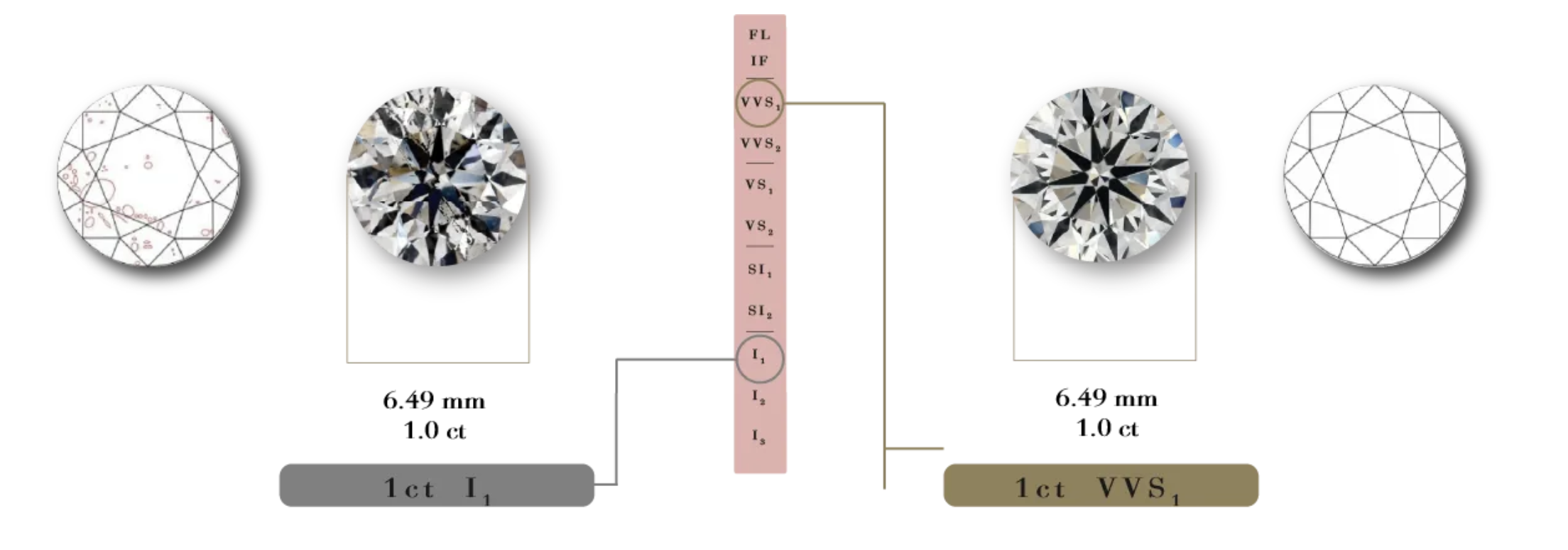
The same diamond grading standards are used for both laboratory-grown diamonds and natural mined diamonds.
carat
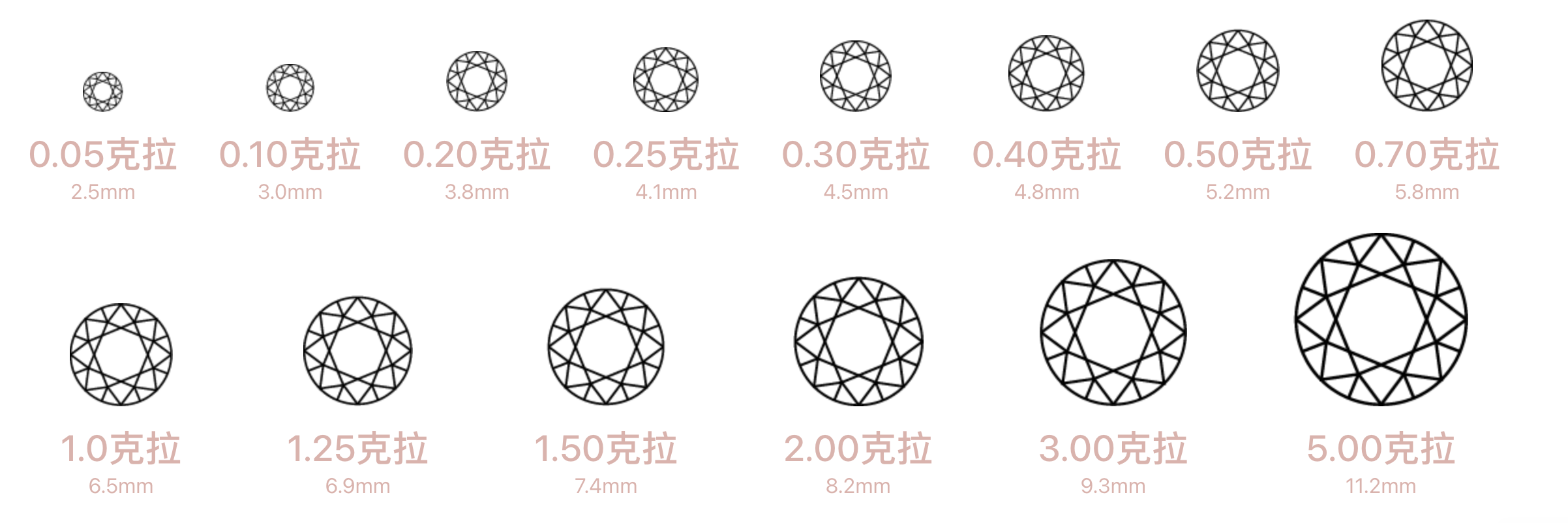
The weight or size of a diamond is expressed in (carats).
1.00 carat is equivalent to 0.2 grams, and the heavier the weight, the higher the value. It is divided into 100 points.
color
The closer a diamond is to being transparent and colorless, the rarer it is and the more valuable it is.
Diamonds are categorized into different colors, ranging from white to yellow. The color of diamonds is determined by the internationally recognized GIA color scale. The color range of diamonds goes from the most valuable D color (colorless) to the least valuable Z color (light yellow).
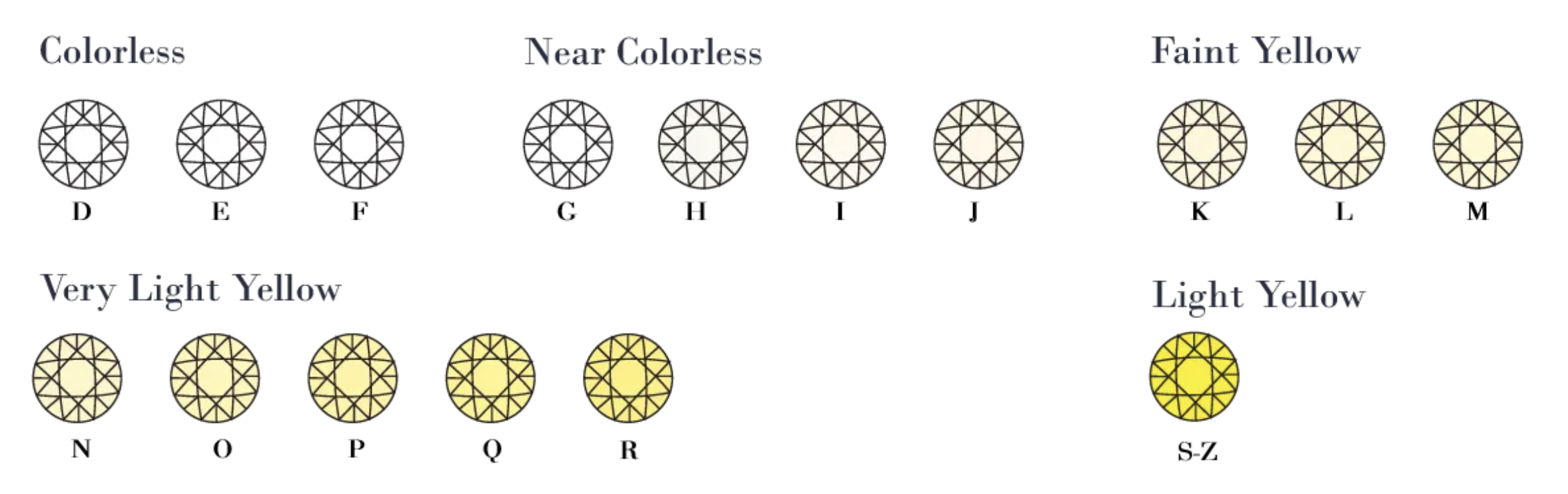
Diamonds can also come in other colors, such as brown, orange, pink, or blue. The most intense hues are referred to as "Fancy Colored," which will be noted on their diamond certificates. These colored diamonds are extremely rare and therefore very valuable. The D-Z color grading system does not apply to colored diamonds.
Cutting
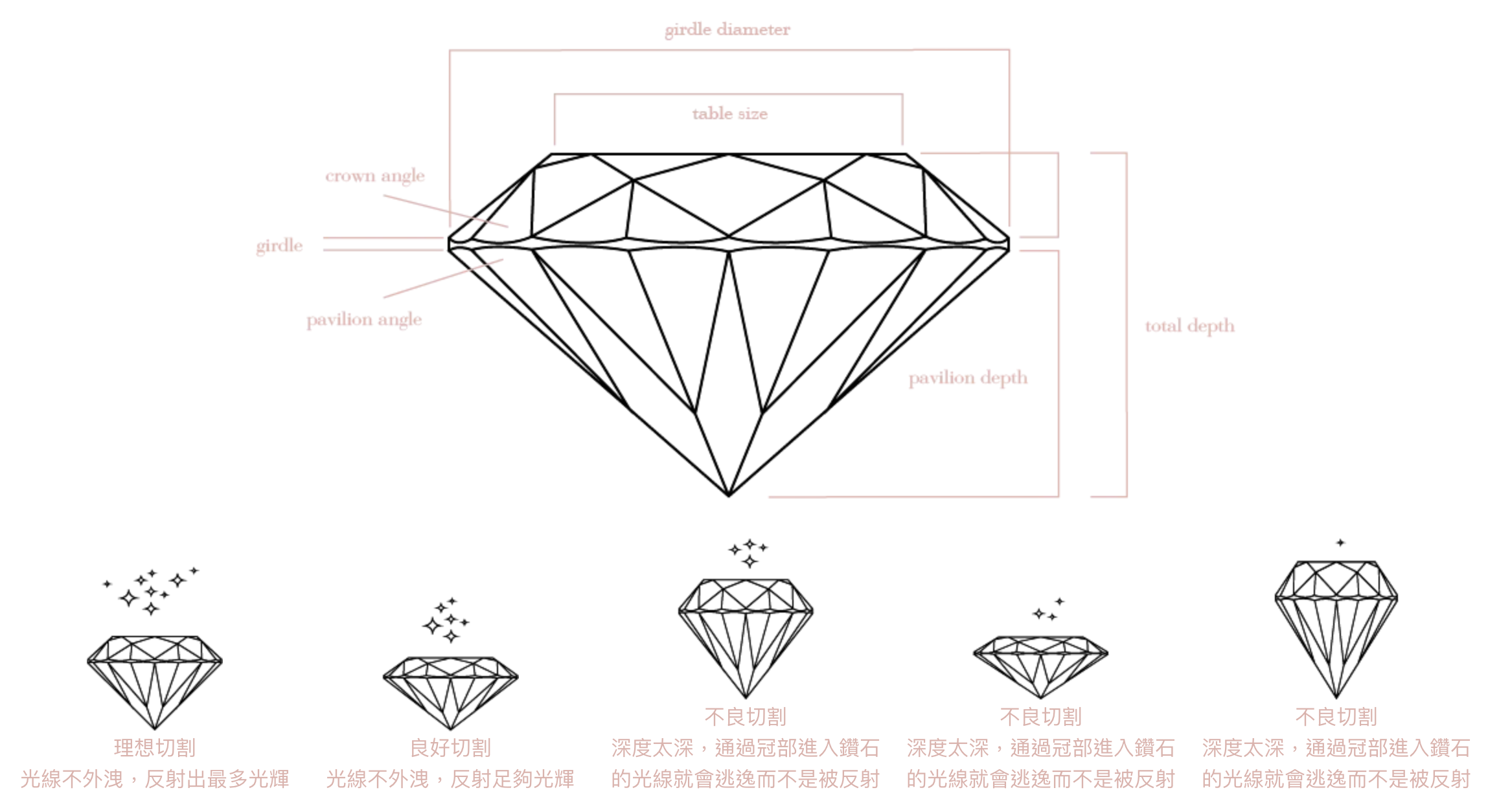
A fine cut makes the diamond look better.
The "fire" of a diamond can be greatly enhanced or diminished depending on its cut. Proportions, symmetry, and polish have a significant impact on the degree of light refraction (fire) in a diamond.
Clarity
The number of inclusions will affect the diamond's ability to reflect light.
Each diamond may contain inclusions, and the quantity, size, shape, and color of these inclusions determine the diamond's clarity and uniqueness. Inclusions are hidden within the diamond and can come in different colors. Most inclusions are not distinguishable to the naked eye and can only be seen clearly under a 10x magnifying glass.
Purity is a grading system that measures the quantity of inclusions and blemishes: from FL/IF (Flawless/Internally Flawless) to I (Included). I level purity refers to inclusions that can be identified with the naked eye.